What Is a Dahabiya Nile Cruise?
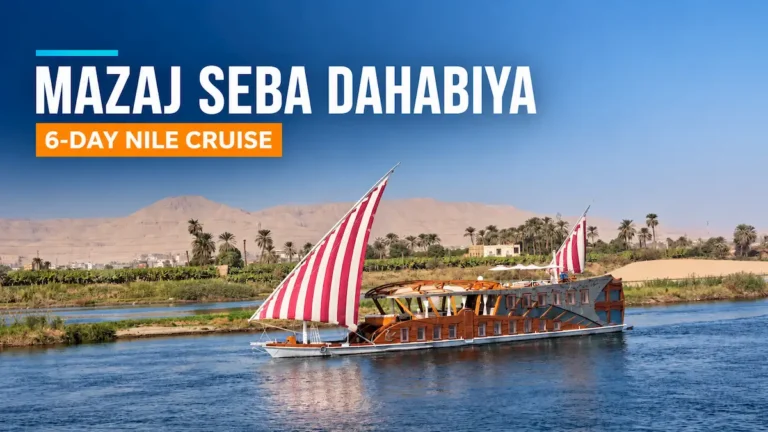
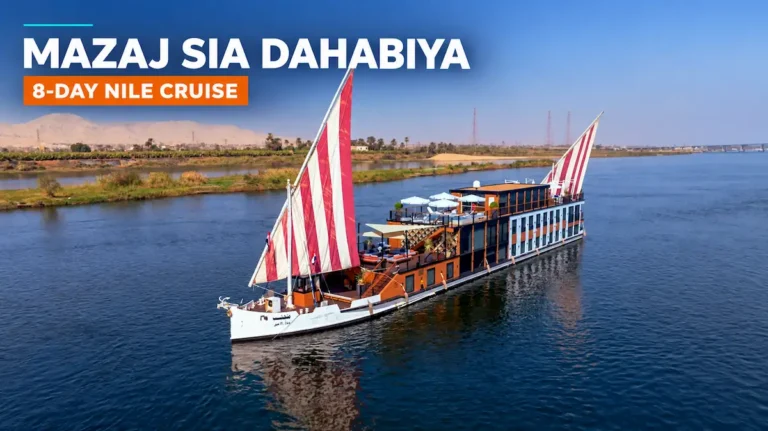
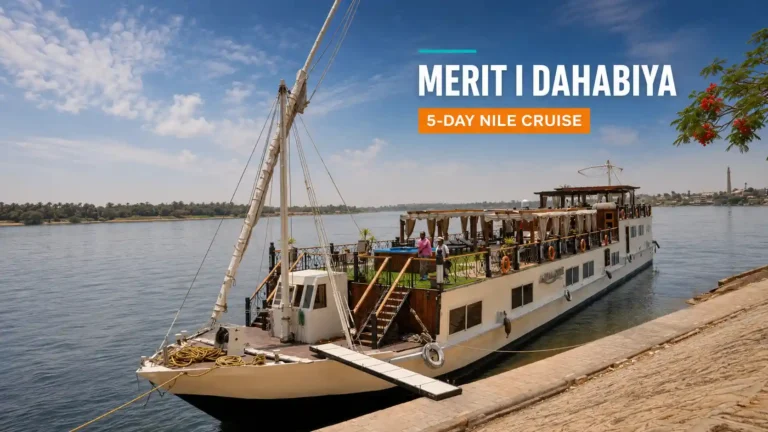
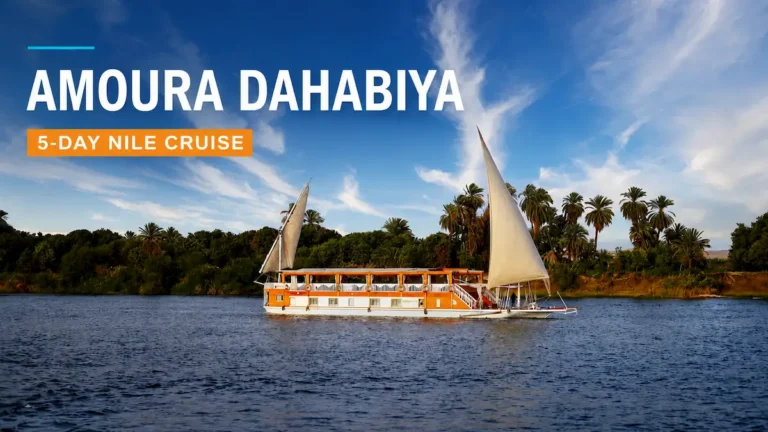
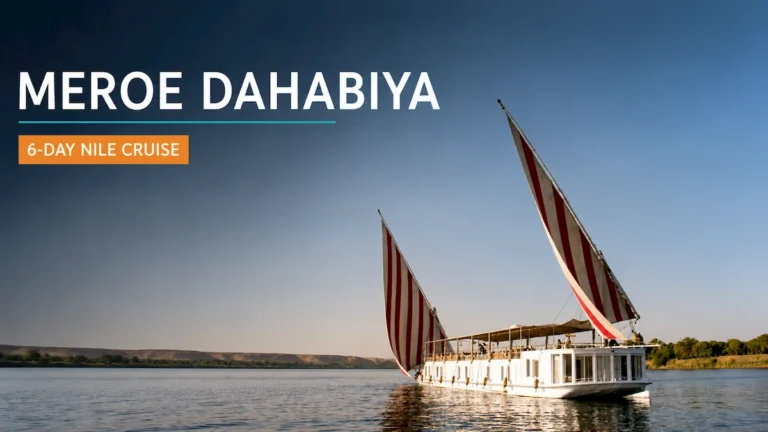
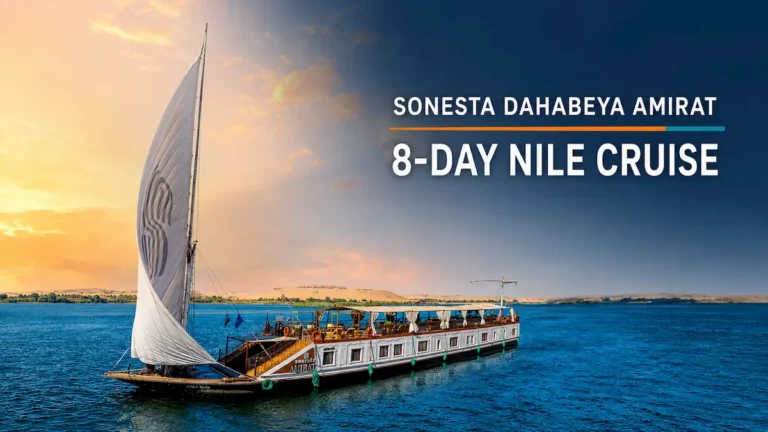
A Dahabiya is a traditionally styled sailing vessel used for small-group journeys along the Nile. Its limited number of cabins creates an experience that feels more like a private river journey than a stay aboard a large cruise ship.
Modern Dahabiyas retain the character of traditional Nile sailing while providing contemporary comforts. Depending on the vessel, facilities may include air-conditioned cabins, private bathrooms, indoor or outdoor dining areas and a spacious sun deck.
The smaller size of a Dahabiya may allow it to moor near islands, villages and quieter stretches of the Nile. These locations can complement visits to Egypt’s major archaeological attractions. Exact stops depend on the selected itinerary, sailing conditions and local navigation requirements.
Although sails are an important part of the Dahabiya experience, vessels may use an engine or supporting towboat when wind or navigation conditions require it.
Dahabiya vs Standard Nile Cruise
Both options provide an opportunity to explore Upper Egypt, but the onboard atmosphere, journey pace and available facilities are different. Your best choice depends on whether you prioritize intimacy and slow travel or frequent departures and extensive facilities.
| Feature |
Dahabiya Nile Cruise |
Standard Nile Cruise Ship |
| Guest capacity |
Small number of passengers |
Considerably more passengers |
| Atmosphere |
Quiet, intimate and relaxed |
Livelier and more social |
| Journey pace |
Slower, with more time to enjoy the river |
Faster and based on a fixed sightseeing schedule |
| River stops |
May include islands, villages and quieter locations |
Usually concentrates on major archaeological attractions |
| Facilities |
Comfortable cabins, dining space and an open sun deck |
May include a pool, spa, bar and entertainment areas |
| Departure dates |
Limited scheduled departures |
More frequent weekly departures |
| Price |
Often higher per person because of limited capacity |
Available across more price categories |
| Best suited to |
Couples, small groups and slow-travel enthusiasts |
Families, larger groups and travelers wanting more facilities |
Choose a Dahabiya if you want:
- A peaceful journey with fewer passengers.
- Personal service and a relaxed onboard atmosphere.
- Open deck space for enjoying the Nile landscape.
- The possibility of visiting smaller river locations.
- A traditional experience instead of a large floating hotel.
Choose a standard Nile cruise if you want:
- More onboard facilities and organized entertainment.
- A wider selection of departure dates and prices.
- A shorter itinerary with a faster sightseeing schedule.
- A more social experience with a larger number of travelers.
If you prefer more facilities or a shorter itinerary, explore our complete selection of Nile River cruises in Egypt.
Popular Dahabiya Nile Cruise Routes
Dahabiya cruises usually operate along the section of the Nile between Luxor and Aswan. Some begin directly in Luxor or Aswan, while others embark or disembark at nearby river ports such as Esna.
Always confirm the exact embarkation location instead of relying only on the route name. Your airport transfer, hotel reservation and domestic flights should be arranged around the confirmed cruise schedule.
Luxor or Esna to Aswan
Southbound itineraries normally begin in Luxor or Esna and sail towards Aswan. Travelers beginning in Luxor may first visit attractions on the East and West Banks before boarding the vessel or continuing towards Esna.
Depending on the selected itinerary, the journey may include Edfu, Kom Ombo, Gebel El-Silsila, Nile islands, villages and other riverside locations before reaching Aswan.
Aswan to Esna or Luxor
Northbound journeys travel from Aswan towards Esna or Luxor. Sightseeing may begin with attractions around Aswan before continuing to Kom Ombo, Edfu and smaller river locations.
The northbound and southbound programs may visit similar destinations, but the sightseeing order, sailing times and overnight mooring locations can differ. Compare the complete daily itineraries rather than selecting a cruise based only on its direction.
Places You May Visit
Every Dahabiya itinerary is different. Major attractions and smaller riverside stops may include:
- Luxor East Bank: Karnak Temple and Luxor Temple.
- Luxor West Bank: the Valley of the Kings, Medinet Habu and the Colossi of Memnon.
- Esna: a historic Nile town and common embarkation point for smaller vessels.
- El Kab: an ancient site that may appear on selected Dahabiya routes.
- Edfu: home to the well-preserved Temple of Horus.
- Gebel El-Silsila: an important ancient sandstone-quarry area beside the Nile.
- Kom Ombo: known for its unusual double temple.
- Local villages and islands: included on selected programs when conditions permit.
- Aswan: the southern endpoint for many Nile journeys and a base for visiting Philae Temple.
These destinations are examples and should not be considered guaranteed inclusions. Check the daily itinerary of your chosen cruise to see exactly which visits are scheduled.
How Long Is a Dahabiya Nile Cruise?
Dahabiya itineraries range from shorter multi-night sailings to longer journeys of approximately one week. The duration depends on the route, embarkation point, number of sightseeing visits and time allocated for relaxed sailing.
A longer cruise does not necessarily include more archaeological attractions. Some programs dedicate additional time to peaceful sailing, village visits or quieter overnight moorings. Compare the complete itinerary rather than choosing only by the number of days.
Check whether the advertised duration includes the embarkation and disembarkation days. These days may contain fewer activities and should be considered when arranging your wider Egypt itinerary.
Dahabiya Nile Cruise Prices
There is no single fixed Dahabiya price. Each vessel has a limited number of cabins, and rates can vary considerably according to the season, route, cabin category and number of travelers.
The prices displayed on this page are starting rates unless otherwise stated. Your final quotation should confirm the departure date, cabin type, occupancy, inclusions, supplements and payment conditions.
Factors that affect the price include:
- The selected vessel and its level of luxury.
- High-season or holiday departure dates.
- The total number of nights.
- Standard cabin or suite accommodation.
- Single, double or triple occupancy.
- Shared departure or private charter.
- Included entrance fees and sightseeing services.
- Private transfers or additional hotel nights.
- Domestic flights or wider Egypt tour arrangements.
- Optional excursions and special experiences.
Because Dahabiyas have limited cabin capacity, availability can disappear quickly for popular dates. Request an updated quotation before purchasing non-refundable flights.
Types of Dahabiya Cruises
Traditional Dahabiya
A traditionally designed Dahabiya emphasizes atmosphere, sailing and a peaceful connection with the Nile. Facilities may be simpler than those found aboard a large luxury cruise ship, but the small-group environment is the main attraction.
Luxury Dahabiya Nile Cruise
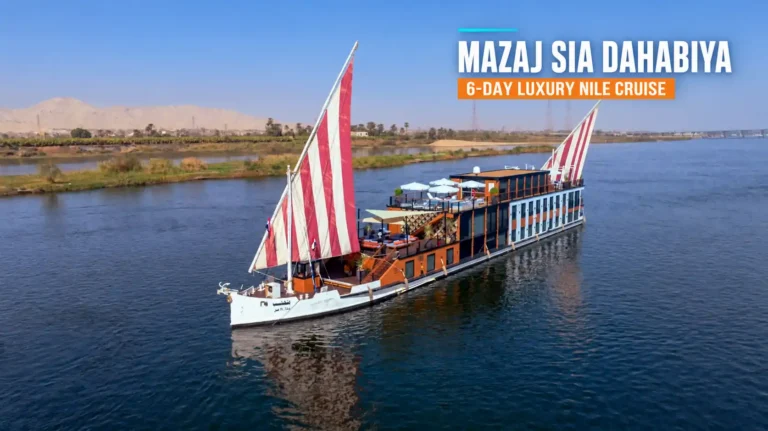
A luxury Dahabiya may provide more spacious cabins or suites, upgraded dining, refined public areas and a higher level of personal service. The meaning of “luxury” varies between vessels, so compare the actual cabin specifications and included services.
Private Dahabiya Charter
Some vessels can be chartered privately for families, friends or special-interest groups. A private charter can provide more flexibility and privacy, but sightseeing arrangements and route changes remain subject to navigation and operational conditions.
Cabins and Onboard Facilities
Dahabiya cabins are generally designed to provide comfort while preserving the character of a traditional vessel. Cabin sizes, bedding, windows and bathroom facilities differ between boats.
Before booking, check whether your selected cabin provides:
- Air conditioning.
- A private bathroom and shower.
- Fixed or convertible beds.
- River-facing windows.
- Storage space for luggage.
- In-room amenities or safe storage.
Public areas normally include an open sun deck and dining space. Some vessels may provide a lounge, library area or additional seating spaces. Swimming pools, spas, gyms and organized entertainment are less common than aboard full-size cruise ships.
Meals and Life Onboard
Meals are commonly served in a shared dining area or on the sun deck when conditions permit. Menus and included beverages vary between vessels, so dietary requirements should be communicated before confirmation.
The onboard experience is normally quiet and informal. Between sightseeing visits, guests can relax, read, take photographs and watch the Nile landscape from the deck. Evening activities are generally less structured than those offered aboard larger ships.
Internet access may be limited or inconsistent while sailing. Travelers should not assume that reliable Wi-Fi will be available throughout the journey.
What Is Usually Included?
Package inclusions vary. Depending on the selected cruise, the price may include:
- Accommodation aboard the Dahabiya.
- Meals during the cruise.
- Scheduled sightseeing described in the itinerary.
- A tour guide or Egyptologist.
- Entrance fees specifically listed as included.
- Transfers mentioned in the confirmed program.
- Taxes and service charges specified in the quotation.
Services that may not be included:
- International or domestic flights.
- Egypt entry visa fees.
- Travel insurance.
- Personal expenses.
- Beverages not listed as included.
- Optional tours and additional entrance tickets.
- Tips for the crew, guides and drivers.
- Hotels and transfers outside the confirmed itinerary.
Only services listed in the cruise page or written quotation should be considered included.
Best Time for a Dahabiya Nile Cruise
October through April generally provides the most comfortable conditions for sightseeing in Luxor, Aswan and the surrounding archaeological sites. Daytime temperatures are usually more suitable for outdoor visits during these months.
December, January and February can have cooler mornings and evenings, particularly on the open sun deck. Bringing a light jacket or layered clothing is advisable.
May through September can be very hot, especially during daytime excursions. Summer travel may still suit visitors who are comfortable with high temperatures, but sun protection, light clothing and sufficient water are essential.
Christmas, New Year, Easter and other popular periods can have stronger demand. Travelers with fixed dates should request availability early.
How to Choose the Best Dahabiya Nile Cruise
The best Dahabiya is not necessarily the most expensive vessel. Compare the complete journey using the following points:
- Route: Confirm the embarkation and disembarkation locations.
- Departure date: Check the vessel’s scheduled sailing direction for your preferred week.
- Duration: Decide whether you prefer a shorter cruise or a relaxed week-long journey.
- Daily itinerary: Check whether your preferred temples and river stops are included.
- Guest capacity: Compare how many travelers the vessel accommodates.
- Cabin category: Examine the size, bedding, windows and bathroom facilities.
- Facilities: Compare deck space, dining areas, lounges and available services.
- Inclusions: Confirm meals, entrance fees, transfers, guides and taxes.
- Price basis: Determine whether the displayed rate is per person and based on double occupancy.
- Accessibility: Ask about stairs, gangways and access to cabins and decks.
- Booking conditions: Review deposit, amendment and cancellation rules.
Who Should Choose a Dahabiya?
A Dahabiya Nile cruise is particularly suitable for couples, honeymooners, small groups, photographers and travelers who prefer a slower cultural journey. The quiet atmosphere can also appeal to guests who want to avoid the crowds associated with large ships.
Families may enjoy the experience, but parents should check the vessel’s child policy, cabin configurations and safety arrangements. Travelers with reduced mobility should request precise accessibility information because traditional vessels may have stairs, narrow passages and changing gangway conditions.
How to Book Your Dahabiya Cruise
Begin by comparing the available cruise packages displayed on this page. Open the package that interests you and review its route, duration, daily itinerary, cabins, inclusions and starting price.
When requesting availability, provide your preferred travel dates, nationality, number of adults, number and ages of children, preferred cabin type and any accessibility or dietary requirements.
We will then check the available sailing date and prepare a quotation based on your selected cruise and travel arrangements. Do not book non-refundable flights until the departure date and embarkation location have been confirmed.